

The Town That Made Death Discussions a Community Norm

Key Points:
High Advance Directive Adoption: Nearly 96% of La Crosse residents who die have advance directives, compared to 30% nationally.
Origins in Healthcare: Started in 1985 by ethicist Bud Hammes in Gundersen Lutheran's dialysis unit to address moral distress in end-of-life decisions.
Respecting Choices Program: Launched in 1993, this community-wide initiative trained facilitators for personalized advance care planning (ACP) discussions.
Community Integration: ACP became a cultural norm, embedded in schools, churches, banks, and casual conversations.
Proven Impact: Studies (LADS I & II) showed 85-90% directive prevalence, 95-99% medical record accessibility, and 98-99% treatment alignment with wishes.
Cost Savings: La Crosse has the lowest end-of-life healthcare costs in the U.S., about 30% below the national average.
Global Influence: Respecting Choices has trained over 10,000 facilitators worldwide, influencing policies and programs in multiple countries.
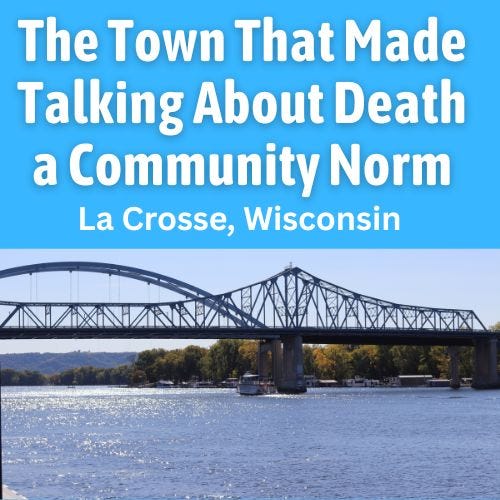
In the rolling hills of western Wisconsin, nestled along the Mississippi River, lies La Crosse—a mid-sized city of about 52,000 people known for its breweries, bluffs, and, unusually, its openness about dying. While most Americans avoid conversations about end-of-life care until it's too late, in La Crosse, advance care planning is as routine as discussing retirement savings. Nearly 96% of residents who die in the community have documented their wishes in an advance directive, compared to just 30% nationally. This isn't the result of a top-down mandate but a collective effort spanning decades, driven by healthcare leaders, nurses, families, and everyday citizens. What began as a quiet frustration in a hospital dialysis unit has blossomed into a model that's influenced communities worldwide.
The Spark: A Ethicist's Frustration in the Dialysis Ward
The story starts in 1985 with Bud Hammes, a clinical ethicist at Gundersen Lutheran Medical Center (now Gundersen Health System). Hammes, then in his early career, was haunted by the moral distress rippling through families and doctors in the dialysis unit. Patients—often elderly and facing gradual declines—lacked clear instructions on their care, leaving loved ones to make agonizing decisions in crises, like whether to continue aggressive treatments that prolonged suffering without meaningful recovery.
Hammes saw an opportunity: These patients were stable enough to plan ahead, but the system wasn't set up for it. Health professionals weren't trained to broach the topic sensitively, and there were no standardized tools for documenting wishes. In 1986-87, he launched the "If I Only Knew..." program, training nurses to guide conversations with the unit's 60 patients. The approach was simple yet revolutionary: Provide educational materials, facilitate discussions about preferences (like forgoing treatments if they offered little benefit), and ensure directives were filed in medical records and shared with emergency teams.
The results were swift. Within a few years, advance directive completion jumped from 1 in 60 to 30 in 60 patients. Families reported less guilt and regret, and physicians faced fewer ethical dilemmas. Moral distress plummeted, and satisfaction soared. Word spread quickly among La Crosse's tight-knit healthcare community, which includes major players like Gundersen, Mayo Clinic Health System, and Franciscan Healthcare.
Building a Community-Wide Movement: The Respecting Choices Task Force
By the late 1980s, the dialysis success inspired broader action. Healthcare leaders from across La Crosse convened, recognizing that fragmented efforts wouldn't suffice for a whole community. In 1990, they formed the La Crosse Advance Directive Task Force, chaired by Hammes, to create a unified system. Funded by local hospitals, the group developed "Respecting Choices," a comprehensive advance care planning (ACP) program emphasizing facilitated conversations over one-size-fits-all forms.
The program rolled out in phases. First came organizational buy-in: Policies were updated, medical records digitized for easy access, and physicians educated on honoring directives. Then, in 1993, the first "First Steps" facilitator training launched, certifying nurses and social workers to lead personalized ACP discussions. These facilitators—now numbering in the hundreds—ask probing questions: What matters most in life? Under what conditions would quality of life change irreversibly? The goal? To craft directives that reflect individual values, not medical defaults.
Community integration was key. Banks, real estate agents, and clergy began incorporating ACP chats into routine interactions. Schools taught kids about it, and libraries hosted workshops. "It's not morbid; it's empowering," Hammes often says. This grassroots embedding turned ACP from a clinical checkbox into a cultural norm, where friends might casually ask, "Hey, have you done your advance directive yet?"
Evidence in Action: The La Crosse Advance Directive Studies
To measure the impact, the task force partnered with the Allina Foundation for rigorous research. The landmark La Crosse Advance Directive Study (LADS I), conducted from 1995-96, reviewed 540 adult decedents who had been mentally capable a decade before death. Astonishingly, 85% had written advance directives, with 95% accessible in medical records at death. Of those, 81% opted to forgo life-sustaining treatments near the end, citing reasons like irreversible quality-of-life drops (35%) or futile survival gains (17%).
Even more telling: Treatment aligned with wishes 98% of the time. CPR was withheld per preferences 100% of the time, and invasive measures like ventilators or feeding tubes followed suit in nearly all cases. While minor inconsistencies arose—such as 16 instances of unplanned hospitalizations, often at patient or family request—the study proved ACP could guide real-world decisions effectively.
A follow-up, LADS II (2007-08), tracked 400 more deaths and showed even stronger results: 90% directive prevalence, 99% in records, and 99% treatment alignment. These findings, published in the Journal of the American Medical Association, catapulted La Crosse into the national spotlight, inspiring replications from California to Australia.
Unintended Benefits: Savings, Satisfaction, and Global Reach
Beyond ethics, the cultural shift yielded practical wins. La Crosse's end-of-life healthcare spending is the lowest in the U.S., per the Dartmouth Atlas of Health Care—about 30% below the national average. This wasn't the goal; Hammes stresses it emerged from honoring wishes, avoiding unwanted interventions that drive up costs. Families, too, benefit: Surveys show reduced emotional trauma and higher satisfaction with care.
The model's scalability led to Respecting Choices' independence in 2017, now under C-TAC Innovations, with Hammes as executive director. It's trained over 10,000 facilitators globally, expanding to Canada, Germany, Singapore, and beyond. In the U.S., it's influenced policies under the Affordable Care Act, which incentivizes ACP reimbursements.
A Blueprint for the Nation
La Crosse's triumph stems from collective will: Healthcare innovators like Hammes and Linda Briggs (now director of program development) provided the framework, but nurses, families, and neighbors made it stick. "We didn't force it; we facilitated it," Hammes reflects. In a nation where 70% of us die after losing decision-making capacity, La Crosse offers hope—and a reminder that talking about death can make living better.
As older adults swell the population, other towns are taking notes. If La Crosse can normalize the uncomfortable, perhaps America can too. After all, in this Wisconsin river town, planning for the end isn't goodbye—it's the ultimate act of care.
From Positive Aging Community: https://www.retirementlivingsourcebook.com/articles/the-town-that-made-death-discussions-a-community-norm