

Planning for Purposeful Aging: The Four-Legged Stool

What This Article Is About
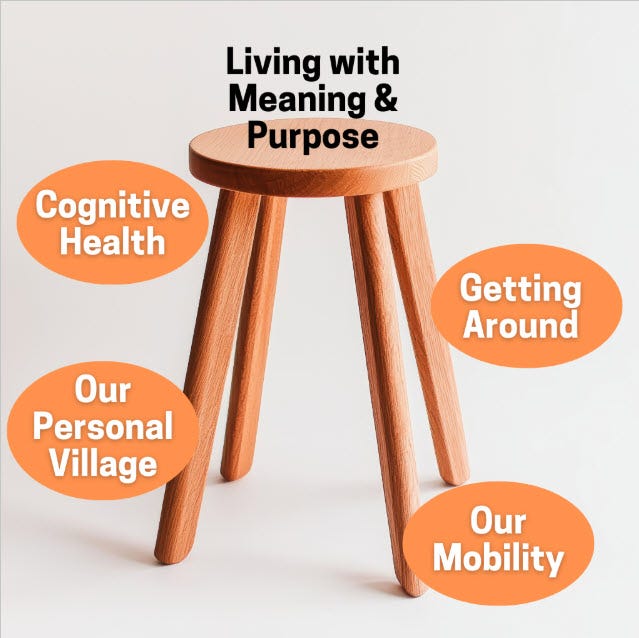
Introduces the "four-legged stool" metaphor to guide purposeful aging through four pillars: Cognitive Health, Getting Around, Our Personal Village, and Our Mobility.
Offers practical strategies and questions to plan proactively for independence, connection, and well-being in later life.
Draws from personal insights gained living in senior communities, emphasizing empowerment and dignity in aging.
Encourages early conversations and actionable steps to transform aging into a season of growth and purpose.
Aging is a natural part of life, but with thoughtful planning, it can be a season of empowerment, meaning, and joy. Rather than waiting for circumstances to force change, proactive preparation allows individuals and families to shape a future filled with dignity and purpose.
A Personal Journey and a Guiding Metaphor At 43, I lived briefly in five senior living communities, gaining a firsthand glimpse into aging. Many residents had transitioned there after one or more pillars of their independence weakened. Yet, these communities revealed a profound truth: purpose, peace, and connection can thrive at any age or ability.
This experience inspired the "four-legged stool" metaphor—a simple, powerful framework for purposeful aging. Each leg represents a pillar of well-being: Cognitive Health, Getting Around, Our Personal Village, and Our Mobility. Like a sturdy stool, balance depends on all four legs. If one falters, stability is at risk, but with foresight, each can be strengthened.
Below, we explore each leg through a guiding question, offering practical insights and expert recommendations to spark early planning and meaningful conversations.
Getting Around: "What are my options if I can’t or prefer not to drive?"
Driving often symbolizes freedom, but age-related changes, sustainability goals, or personal preferences may shift this reliance. Planning ahead prevents isolation and preserves independence.
Assess your needs: List routine destinations (grocery stores, doctor’s appointments, social events) and frequency.
Explore alternatives: Public transit, rideshares (Uber, Lyft), or senior-friendly apps like GoGoGrandparent.
Tap community resources: Volunteer driver programs (Village to Village Network, AgingForward) or rural options like ITNAmerica.
Use technology: Apps like Google Maps or electric bikes/scooters for short trips.
Plan financially and socially: Budget for transportation costs and discuss ride-sharing with family or friends.
Transitioning from driving isn’t a loss—it’s an opportunity to adapt and maintain your lifestyle and connections.
Our Mobility: "How can I navigate my home if mobility becomes challenging?"
A home should remain a sanctuary, even as mobility changes due to arthritis, injury, or balance concerns. Early modifications ensure safety and comfort.
Conduct a home audit: Walk through your space, imagining limited mobility. Identify potential obstacles like narrow doorways or stairs.
Make adaptations: Install grab bars, ramps, or stairlifts; switch to lever-style handles and non-slip flooring.
Embrace assistive tools: Canes, walkers, scooters, or smart home devices (voice-activated lights, robotic vacuums).
Seek expert guidance: Consult occupational therapists or Certified Aging-in-Place Specialists. Use AARP’s HomeFit Guide for practical checklists.
Plan incrementally: Integrate upgrades during renovations to spread costs over time.
Proactive changes transform your home into a supportive space, fostering independence and ease.
Our Personal Village: "How can I stay connected if I feel isolated?"
Connection is vital to well-being; loneliness can be as harmful as major health risks. Building a strong social network ensures resilience and joy.
Map your circle: List current connections and potential new contacts (neighbors, old friends).
Engage locally: Join community centers, libraries, or volunteer groups. Take a class or attend local events.
Leverage technology: Use Zoom, FaceTime, or apps like Meetup to connect with interest-based groups.
Explore support systems: Programs like Meals on Wheels, Village to Village Network, or AgingForward offer community. Consider co-housing or intergenerational living for built-in connection.
Take action: Schedule regular meetups, coffee dates, or join a club to stay engaged.
Purposeful outreach creates a vibrant "village" that sustains independence and happiness.
Cognitive Health: "How can I prepare for cognitive changes like dementia?"
Cognitive shifts often unfold gradually. Early planning preserves autonomy and fosters well-being, even amidst challenges.
Start the conversation: Discuss family history, monitor subtle changes, and schedule regular screenings.
Adopt healthy habits: Regular exercise, a Mediterranean diet, lifelong learning, and quality sleep can slow cognitive decline.
Use tools and support: Set up legal plans (advance directives, power of attorney), memory care apps, or smart pill dispensers to maintain routines.
Access resources: Organizations like the Alzheimer’s Association provide programs and guidance.
Plan for possibilities: Outline care preferences and involve loved ones early. Focus on joyful activities like music, nature, or storytelling.
Emphasizing what’s possible ensures purpose and connection, no matter the cognitive journey.
Building Your Sturdy Stool
The four-legged stool isn’t about fearing loss—it’s a practical, empowering guide for living intentionally in later life. Start by listing one action for each leg, share the model with loved ones, and spark open conversations about aging.
With early planning and strong support, aging becomes a chapter of growth, connection, and purpose—a stool that holds steady through every season.
https://www.retirementlivingsourcebook.com/articles/planning-for-purposeful-aging-the-four-legged-stool