

Age-Friendly Communities: Building Livable Spaces for All Ages

As America's population ages rapidly, communities across the United States are adapting to meet the needs of older adults while benefiting residents of every generation. According to the U.S. Census Bureau, by 2034, the nation will have more people aged 65 or older than those under 18, and by 2060, nearly one in four Americans will be at least 65. This demographic shift presents both challenges and opportunities for fostering economic growth, healthier living, and happier residents through well-designed, inclusive environments.
What Are Age-Friendly Communities?
An age-friendly community is one that is livable for people of all ages, particularly older adults. It adapts services, infrastructure, and social structures to promote independence, participation, and well-being. The concept is rooted in the World Health Organization's (WHO) Age-Friendly Cities Framework, which outlines eight interconnected domains to address barriers faced by older people. These domains include outdoor spaces and buildings, transportation, housing, social participation, respect and social inclusion, civic participation and employment, communication and information, and community support and health services. The framework emphasizes how these areas overlap—for instance, accessible public transport can enhance mobility and social engagement, while opportunities for volunteering contribute to a sense of purpose in later life.
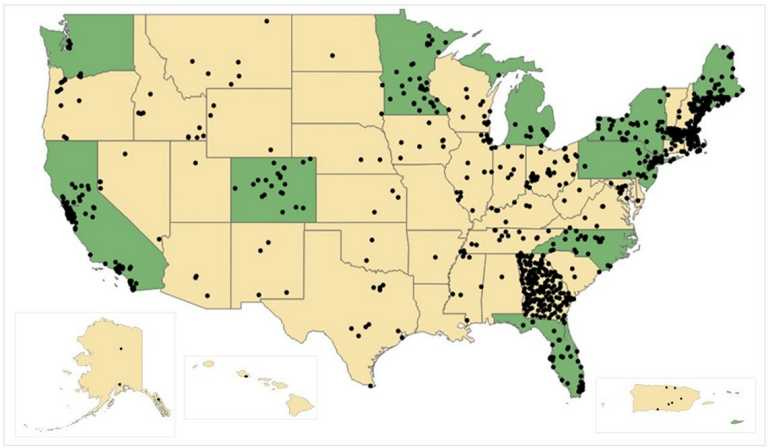
In the U.S., the AARP Network of Age-Friendly States and Communities, an affiliate of the WHO's Global Network for Age-Friendly Cities and Communities, leads these efforts. Established in 2012, the network supports local, regional, and state governments in preparing for aging populations by providing resources for needs assessments, action planning, and implementation. Membership signals a commitment from elected leaders to work with residents on improvements that make communities more inclusive.
The AARP Network: How It Works
Enrollment in the AARP Network is free and open to towns, cities, counties, and states. Communities submit an application along with a letter of commitment from the highest elected official, such as a mayor or governor, or a resolution from a legislative body. Once enrolled, members follow a five-year cycle of continuous improvement:
Enrollment and Assessment (Years 1-2): Establish mechanisms to involve older residents and conduct a community needs assessment using tools like surveys provided by AARP.
Planning (Year 2): Develop an action plan based on assessment results, submitted to AARP for review.
Implementation (Years 3-5): Execute the plan, track progress, and evaluate impacts.
Evaluation and Renewal (Year 5 and Beyond): Submit progress reports, share best practices, and repeat the process for ongoing enhancement.
The network organizes work around the WHO's eight domains of livability, ensuring a holistic approach that covers the built environment (e.g., safe outdoor spaces and accessible buildings) and social environment (e.g., opportunities for social and civic participation).
As of September 2025, the network has seen significant growth, reaching 1,000 communities nationwide as announced in a recent press release. This milestone follows steady expansion; in July 2024, there were over 887 communities and 11 states enrolled. Membership provides access to expert webinars, technical assistance, a private forum for discussions, and connections to a national peer network. It fosters partnerships among local stakeholders, including government agencies, nonprofits, academic institutions, and businesses.
Benefits and Impacts of Age-Friendly Initiatives
Age-friendly communities yield wide-ranging benefits that extend beyond older adults, creating more vibrant and equitable places for everyone. Key advantages include:
Improved Quality of Life: Accessible public spaces, transportation, and housing enhance comfort and enjoyment, reducing isolation and promoting physical activity. Studies show increases in happiness, preventive care engagement, and overall well-being.
Health and Social Outcomes: These communities lower healthcare costs by preventing chronic diseases through better walkability, emergency preparedness, and access to services. They also boost social connections, combating loneliness with events and activities that foster inclusion.
Economic and Policy Advancements: 73% of member communities have achieved policy changes, such as integrating age-friendly considerations into planning. Public and private investments follow, with 63% receiving funding from municipal sources and 41% from private sectors. Additionally, 96% overcome barriers like raising awareness and building collaborations.
Broader Societal Gains: Safer streets, affordable housing, and stronger local economies improve life for all ages, aligning with global goals like the UN Sustainable Development Goals for inclusive cities.
Over 100 million Americans now live in committed age-friendly communities, demonstrating the initiative's scale and impact.
Examples of Age-Friendly Communities in Action
Numerous U.S. communities exemplify these principles. For instance:
Alexandria, Minnesota (Joined 2016): Focuses on enhancing transportation and outdoor spaces to support rural aging.
Brooklyn Park, Minnesota (Joined 2020): Integrates age-friendly lenses into community planning for better housing and health services.
Duluth, Minnesota (Joined 2021): Emphasizes social inclusion through events and volunteer opportunities.
Washington State (Enrolled 2024): A statewide effort collaborating across health departments to reduce disparities and promote dementia-friendly practices.
New York State: Provides technical assistance for smart growth policies addressing obesity, diabetes, and mental health.
Rural initiatives, like those from the National Rural Health Association, offer recognition through programs such as the Institute for Healthcare Improvement's Action Communities. Globally, the WHO network has grown to over 500 members in 37 countries, with ongoing priorities for 2017-2020 emphasizing age-friendly environments.
The AARP Community Challenge grants further support quick-action projects; in 2025, 383 initiatives received funding to improve livability, totaling $24.3 million invested since 2017.
Recent Developments and Future Outlook
In 2025, the network continues to expand, with events like the Age-Friendly in Action Forum focusing on engagement and sustainability. Equity remains a priority, as communities work to eliminate disparities in serving diverse populations. Nationally, efforts align with the Older Americans Act's push for a Healthy Aging and Age-Friendly Communities Interagency Coordinating Committee, which released a strategic framework in 2024 to guide a U.S. National Plan on Aging.
Looking ahead, age-friendly ecosystems—encompassing health systems, universities, and public health—are gaining traction to collaboratively improve outcomes for older adults. As more states and communities join, the movement promises healthier, more productive societies where aging is an opportunity, not a challenge.
AARP Livable Communities Map -
https://livablemap.aarp.org/
1,000 Communities — and Counting! - AARP - https://www.aarp.org/livable-communities/network-age-friendly-communities/info-2025/1000-communities.html
Age-Friendly Designation 2022–2025 - The Patterson Foundation (example of rural/community initiatives) - http://www.thepattersonfoundation.org/blog/community-for-all-ages-blog/age-friendly-designation-2022-2025.html
Age-Friendly Ecosystem - The John A. Hartford Foundation - https://www.johnahartford.org/grants-strategy/current-strategies/age-friendly/age-friendly-ecosystem
How to Use the AARP Livable Communities Map - https://www.aarp.org/livable-communities/about/info-2023/aarp-livable-communities-map.html
An Introduction to the AARP Network of Age-Friendly States and Communities (source for policy change statistics) - https://www.aarp.org/livable-communities/network-age-friendly-communities/age-friendly-network-introduction.html
2025 Age Friendly In Action: Insights and Ideas Forum - Empowerline - https://empowerline.org/event/2025-age-friendly-in-action-insights-and-ideas-forum/
State Members of the Age-Friendly Network - AARP (includes Washington State) - https://www.aarp.org/livable-communities/network-age-friendly-communities/states/state-members.html
AARP Community Challenge - https://www.aarp.org/livable-communities/community-challenge/
Healthy Aging and Age-Friendly Communities Interagency Coordinating Committee 2024 - https://acl.gov/ICC-Aging
Age-Friendly Network Communities and Equity - AARP - https://www.aarp.org/livable-communities/network-age-friendly-communities/info-2020/age-friendly-and-equity.html
Age Friendly Communities (Minnesota examples) - https://semaaa.org/funding-community/age-friendly-communities/
AARP Research Insights on Livable Communities - https://www.aarp.org/pri/topics/livable-communities/aarp-research-insights-livable-communities/
Age-Friendly Communities and Older Adults' Health in the United States - https://pmc.ncbi.nlm.nih.gov/articles/PMC9368031/
Age-Friendly Cities on the Rise - AARP States (social outcomes) - https://states.aarp.org/new-york/age-friendly-cities-on-the-rise-aarp-network-reaches-1-000-communities-as-new-york-communities-help-lead-the-way
Building an Age-Friendly Ecosystem - National Council on Aging - https://www.ncoa.org/article/how-to-help-build-age-friendly-ecosystems/
Investing in Age-friendly Sustainability - AARP Blogs (health and economic impacts) - https://blog.aarp.org/thinking-policy/investing-age-friendly-sustainability
The WHO Age-friendly Cities Framework - https://extranet.who.int/agefriendlyworld/age-friendly-cities-framework/